
Cleaning and polishing help maintain your prosthesis's surface, but maintenance alone can't address every change in comfort or appearance.
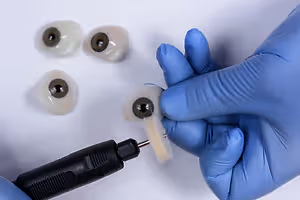
Prosthetic Eye Cleaning & Polishing in Connecticut
QUICK LINKS
No locations match that search.
Kennedy & Perkins Guild Opticians - North Haven
Kennedy & Perkins Guild Opticians - North Haven
Kennedy & Perkins Opticians - Branford
Kennedy & Perkins Opticians - Branford
Kennedy & Perkins Opticians - Old Saybrook
Kennedy & Perkins Opticians - Old Saybrook
Kennedy & Perkins Opticians - Guilford
Kennedy & Perkins Opticians - Guilford
Kennedy & Perkins Opticians - Milford
Kennedy & Perkins Opticians - Milford
Kennedy & Perkins Opticians - New Haven
Kennedy & Perkins Opticians - New Haven

Surface Buildup & Roughness Can Indicate It Is Time for Professional Maintenance
Over time, deposits can accumulate on a prosthetic eye, and everyday wear can affect its surface finish. Professional maintenance may be appropriate when you notice:
-
Persistent deposits that are difficult to remove through your usual cleaning routine
-
A rougher surface than usual
-
Changes in the smoothness or finish of your prosthesis
-
Visible buildup that returns despite routine cleaning
-
Changes in appearance that may be related to surface deposits
These changes do not automatically mean your prosthetic eye needs replacing. However, they also do not establish that polishing will resolve the problem.
Persistent pain, redness, swelling, or discharge should be assessed by your ocularist or treating eye care professional.
Your Prosthetic Eye's Condition Determines How Often It Needs Polishing
Professionals often recommend periodic polishing as part of prosthetic eye maintenance, but the right interval varies.
Your prosthesis material, surface condition, deposit buildup, and individual circumstances can affect how often you need maintenance.
Your ocularist can recommend a schedule based on your prosthesis's condition. If you notice new surface changes between scheduled visits, ask whether an earlier assessment is appropriate.
Routine Cleaning & Professional Polishing Address Different Surface Concerns
Regular cleaning and professional polishing are not interchangeable. They serve different purposes in maintaining an artificial eye.
Your regular cleaning routine helps manage deposits that accumulate during wear.
Follow the cleaning instructions provided by your ocularist. Cleaning methods and recommended products can vary depending on the prosthesis material and your individual care instructions.
Avoid using household cleaners, abrasive products, or unapproved solutions on your artificial eye.
Surface roughness does not mean a prosthesis has reached the end of its useful life.
Some surface changes may be suitable for professional polishing. Other concerns, including significant scratches, cracks, deterioration, or changes in fit, may require an ocularist's assessment.
If your artificial eye has become uncomfortable or visibly damaged, have it assessed before assuming that polishing or replacement is necessary.
Not every prosthetic eye concern is caused by buildup on the surface.
Discomfort may also result from changes in prosthesis fit, the condition of the eye socket, or other medical factors.
If you experience persistent redness, discharge, swelling, pain, or difficulty wearing your prosthesis, contact your ocularist or treating eye care professional.
Seek prompt medical assessment for severe pain, significant swelling, or rapidly worsening symptoms. Do not let cleaning and polishing delay appropriate medical care.
Confirm Which Location Offers Prosthetic Eye Cleaning & Polishing
We provide cleaning and polishing services for prosthetic and artificial eyes. Contact our team to confirm which Kennedy & Perkins location offers the service and how to arrange a visit.
If you have noticed changes in the surface condition of your prosthesis, describe them when making your inquiry so the appropriate next step can be discussed.
Frequently Asked Questions About Prosthetic Eye Maintenance
How Often Should a Prosthetic Eye Be Professionally Polished?
The appropriate schedule depends on the prosthesis and its condition. Your ocularist can recommend a maintenance interval based on surface wear, deposits, and your needs.
Will Polishing Remove Scratches From My Artificial Eye?
Polishing may address some superficial surface irregularities, but it cannot correct every scratch or type of damage. An ocularist should assess significant scratches, cracks, or deterioration.
Why Does Buildup Keep Returning to My Prosthetic Eye?
Deposits can accumulate during normal wear. Persistent or unusually rapid buildup may warrant a review of your cleaning routine, prosthesis condition, or other contributing factors.
Can Polishing Help if My Prosthetic Eye Is Causing Irritation?
Surface roughness can contribute to friction, but irritation may have other causes. Persistent discomfort, redness, or discharge requires assessment rather than assuming polishing will resolve it.
Arrange Cleaning & Polishing for Your Prosthetic Eye
If you have noticed surface buildup, roughness, or changes in your prosthesis's finish, contact our team to ask about professional cleaning and polishing.
We can provide information on service availability and how to schedule an appointment.